

Poetic Justice
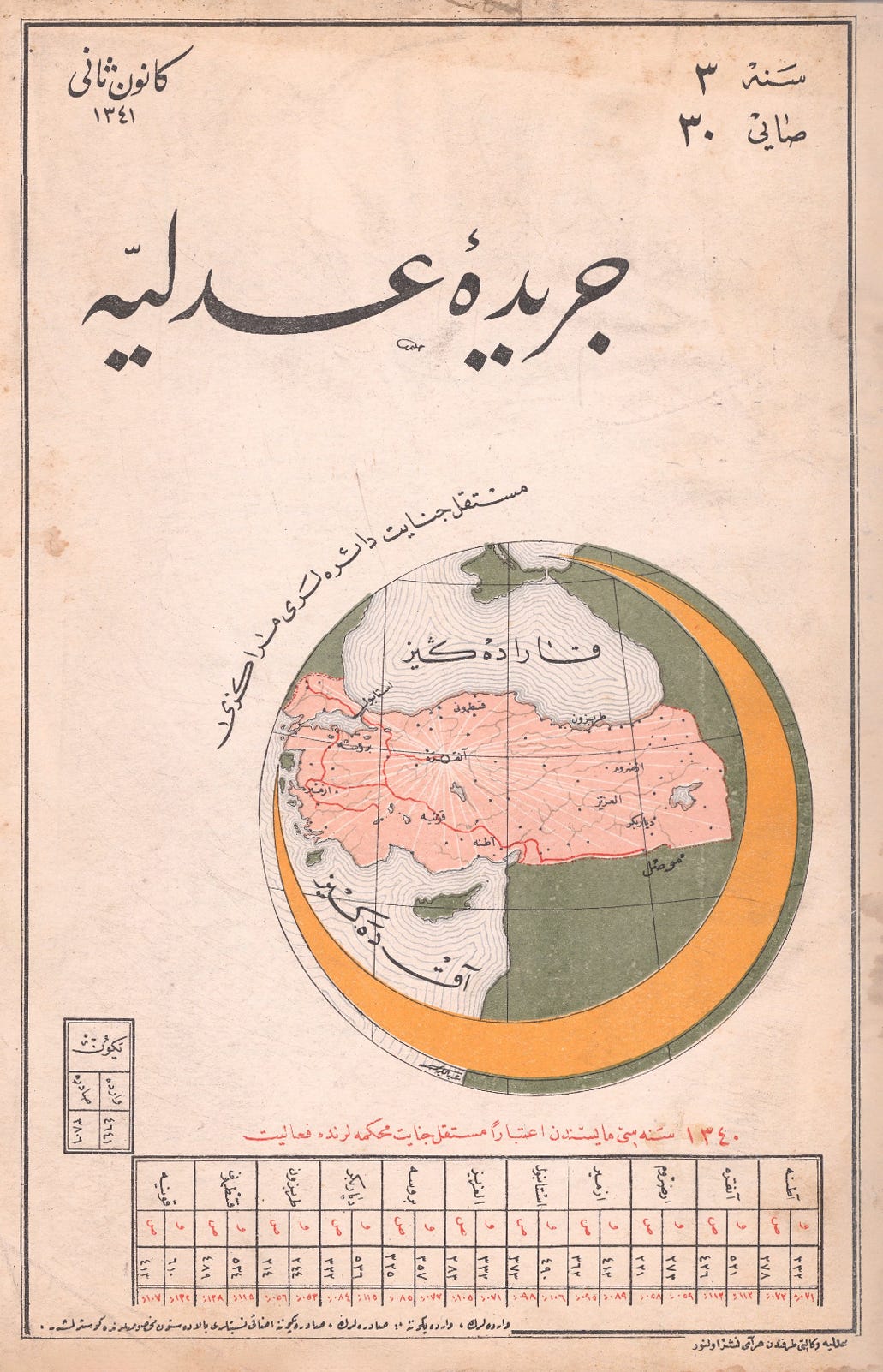
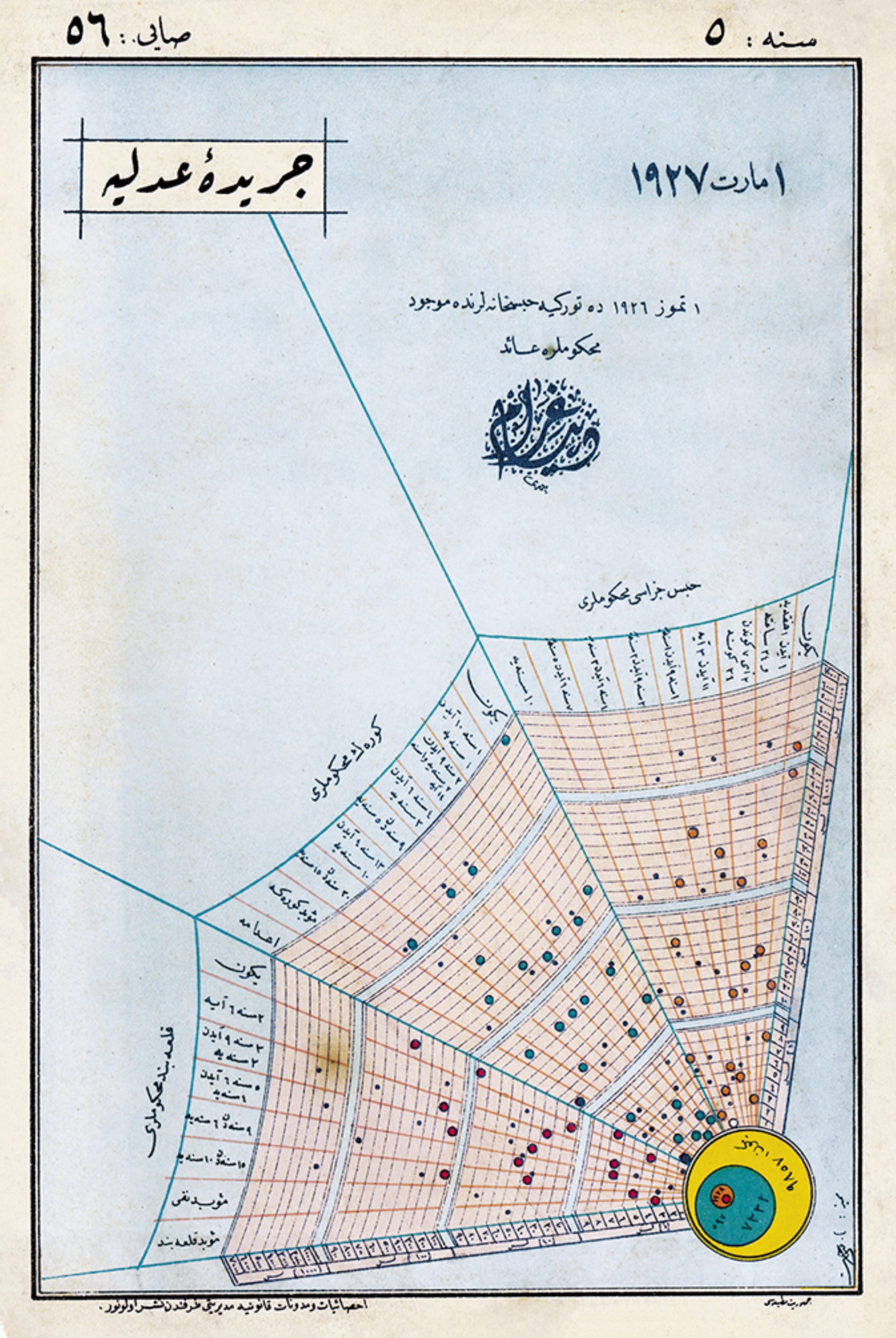
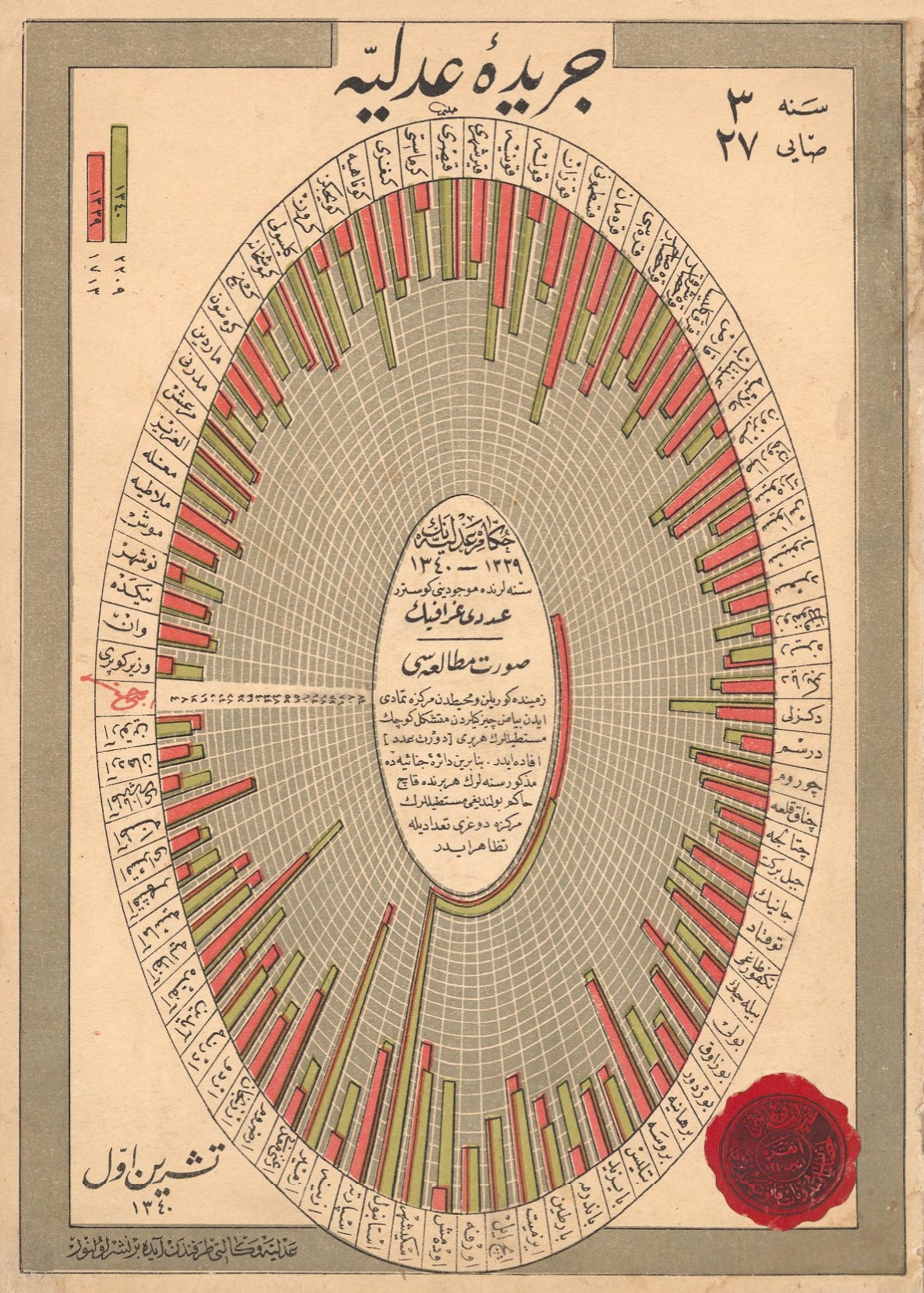
Today’s collection is a set of Ottoman-era data visualizations from Cerîde-i Adliyye, “The Justice Gazette,” a Ministry of Justice publication printed in Türkiye in the mid-1920s (thanks to chart-maker and -enthusiast Juweek Adolphe of Gourmet Data, who shared them in a design-y Slack group I’m in.)
The Justice Gazette was first published in 1909 in Istanbul to document various legal news and statistics (things like judicial inspector reports, scholarly articles, legal opinions, and translations of foreign laws). These particular graphs are from the magazine’s relaunch in Ankara during the 1920s and early 30s; following the dissolution of the long-standing Ottoman Empire in 1922, but while the administrative institutions of the new Turkish Republic were still quite young. They also function as something of an index fossil for the last gasp of Arabic script in official Turkish use; in 1928, Turkish alphabet reform led to it being replaced by the Latin alphabet (the last issue of the publication that used Arabic script was Issue 76).
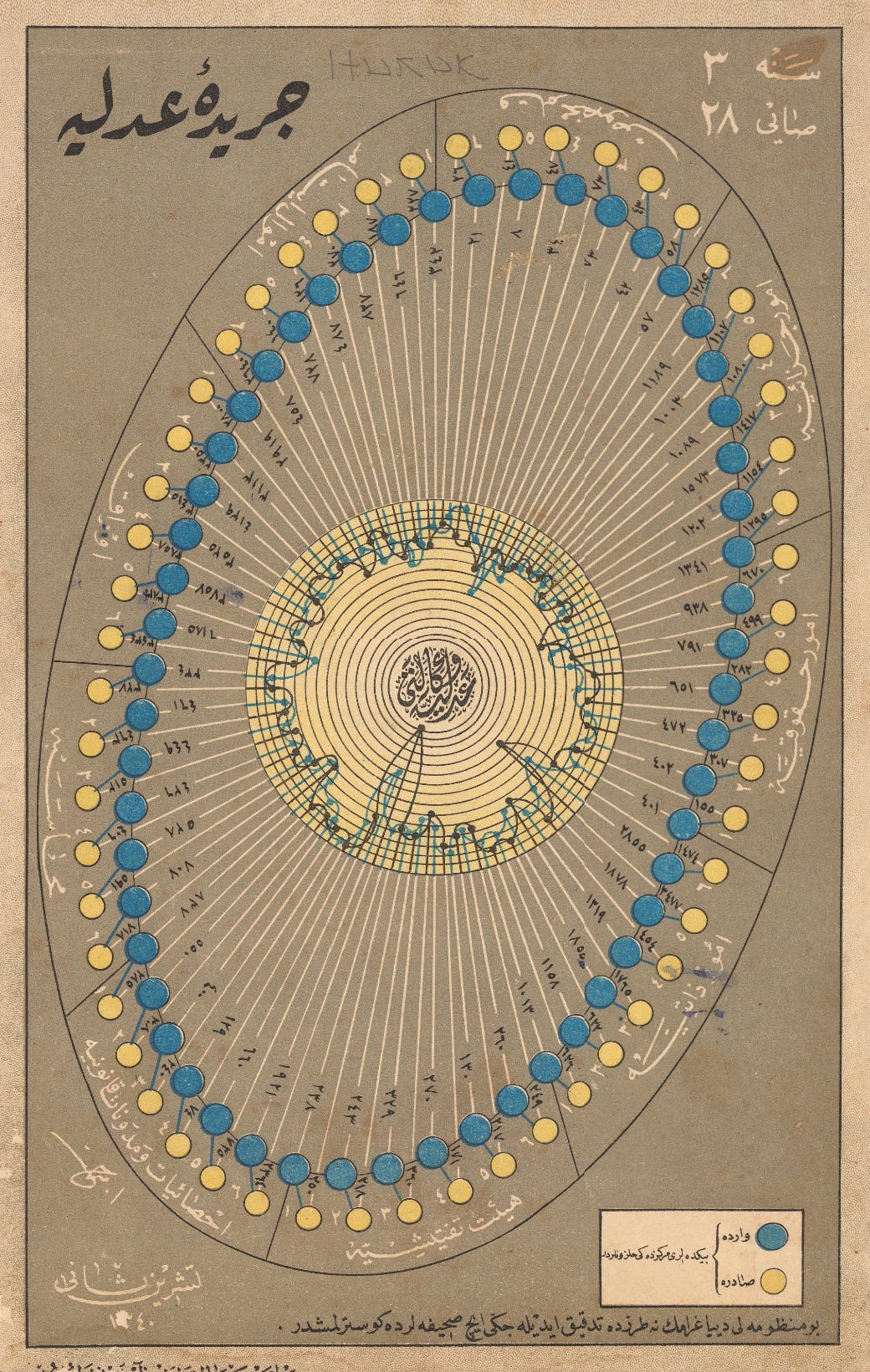
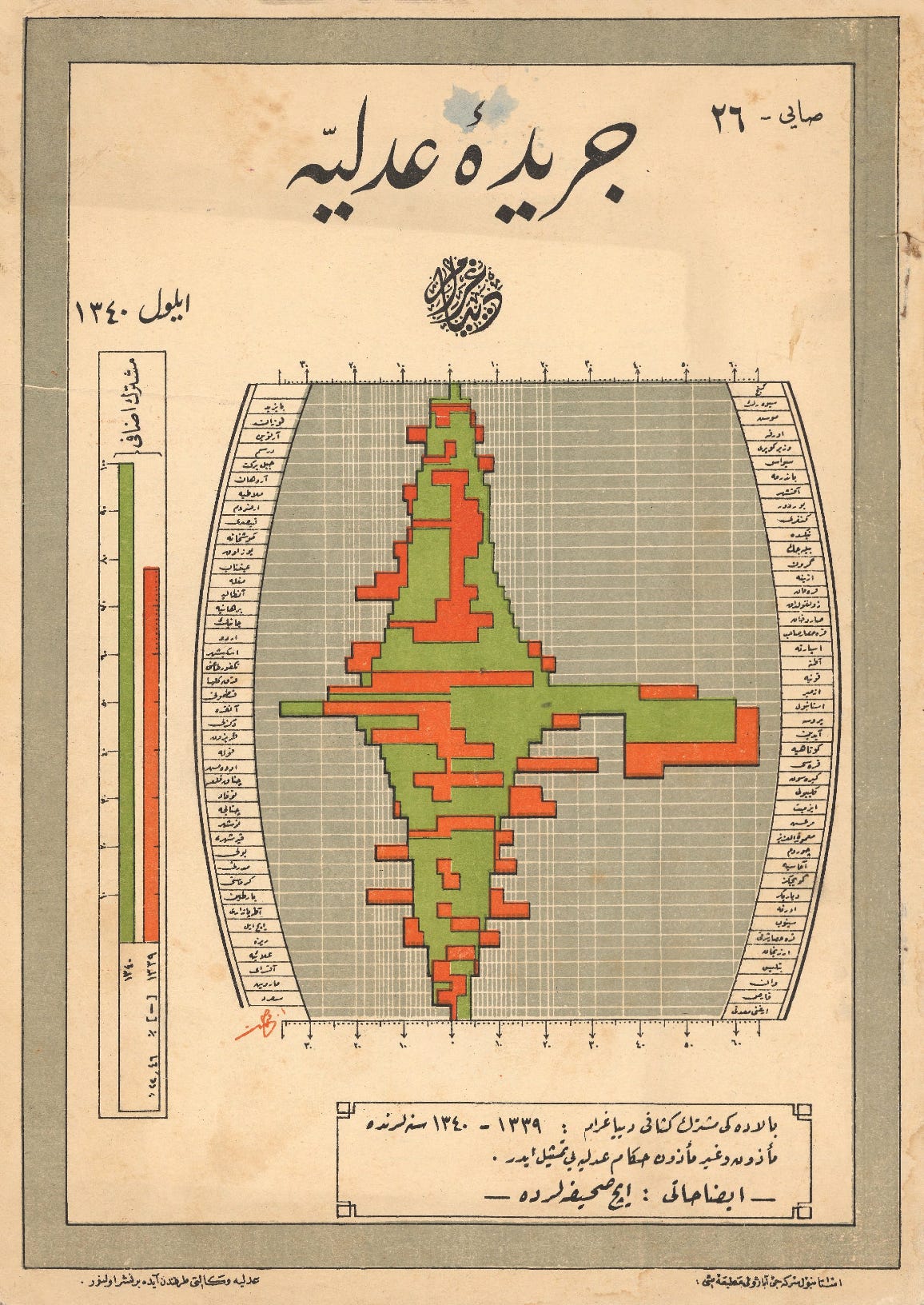
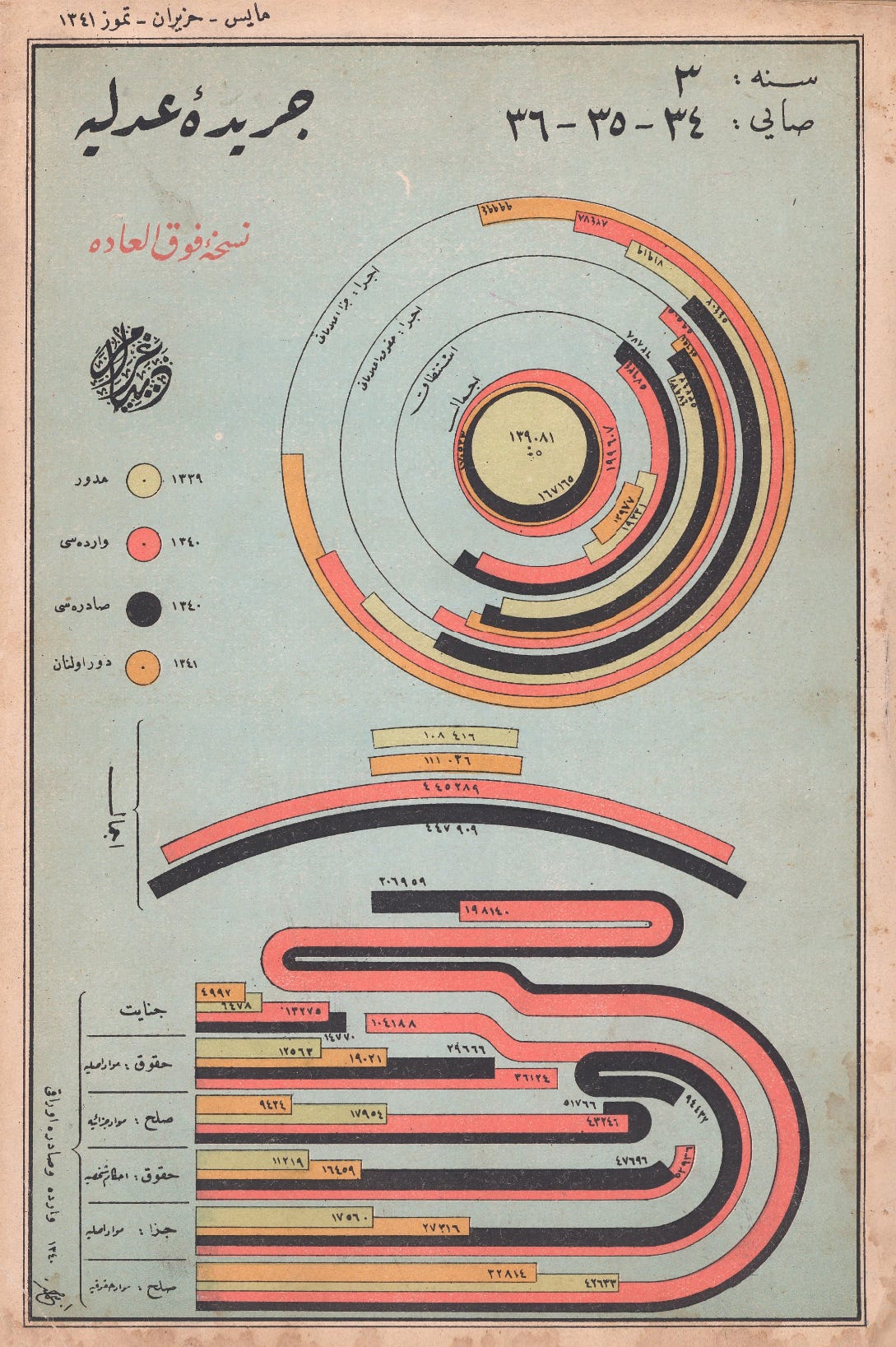
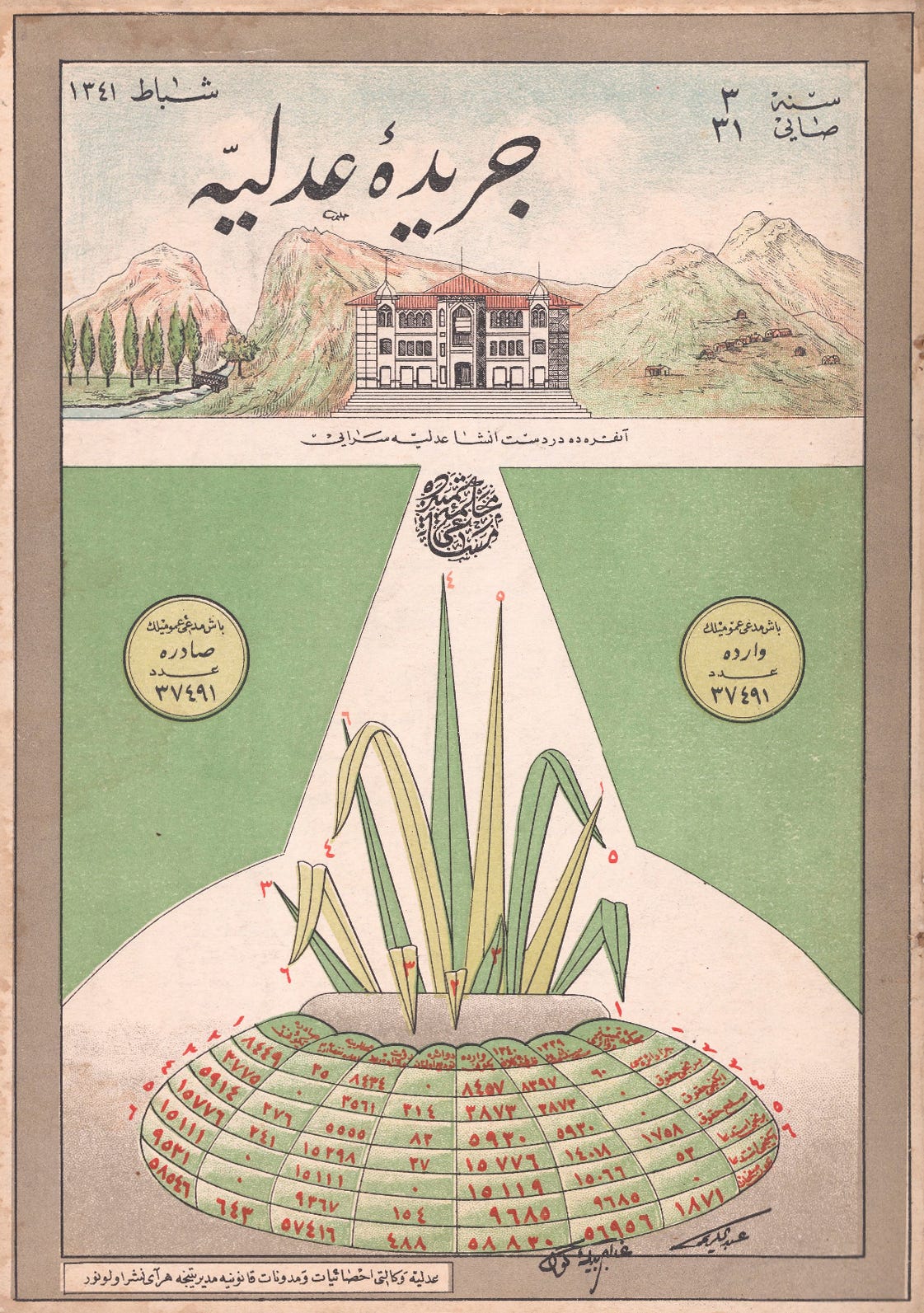
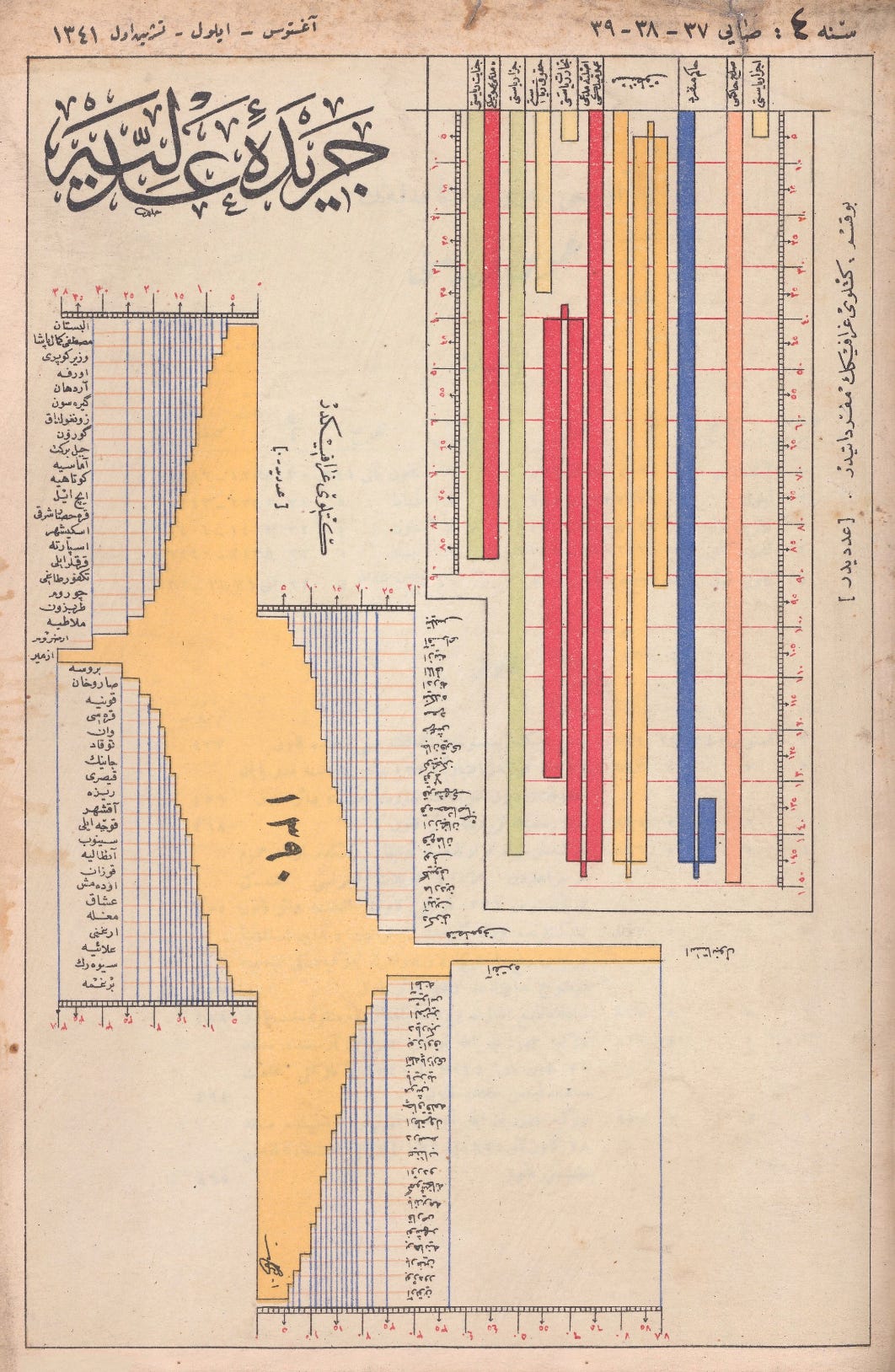
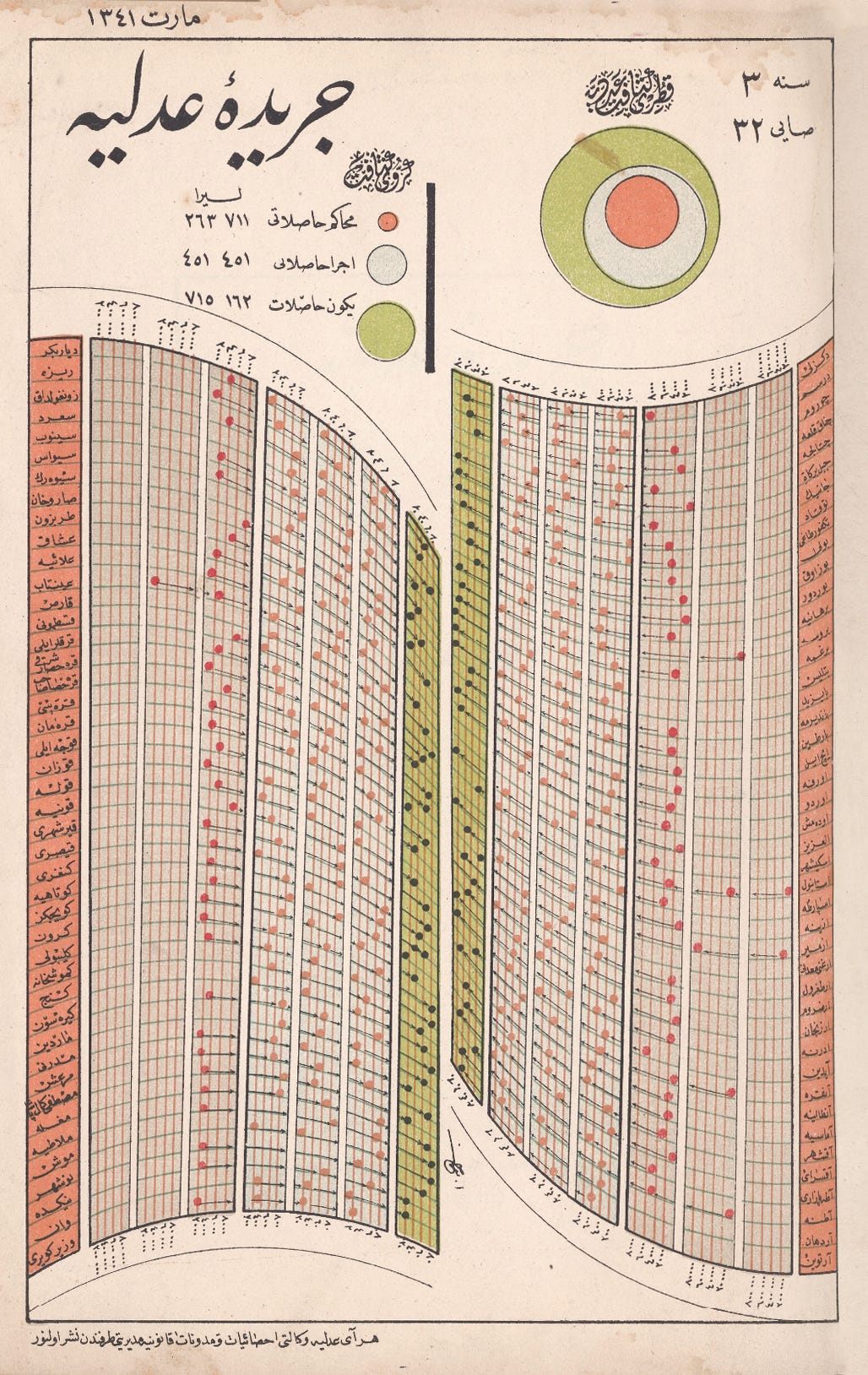
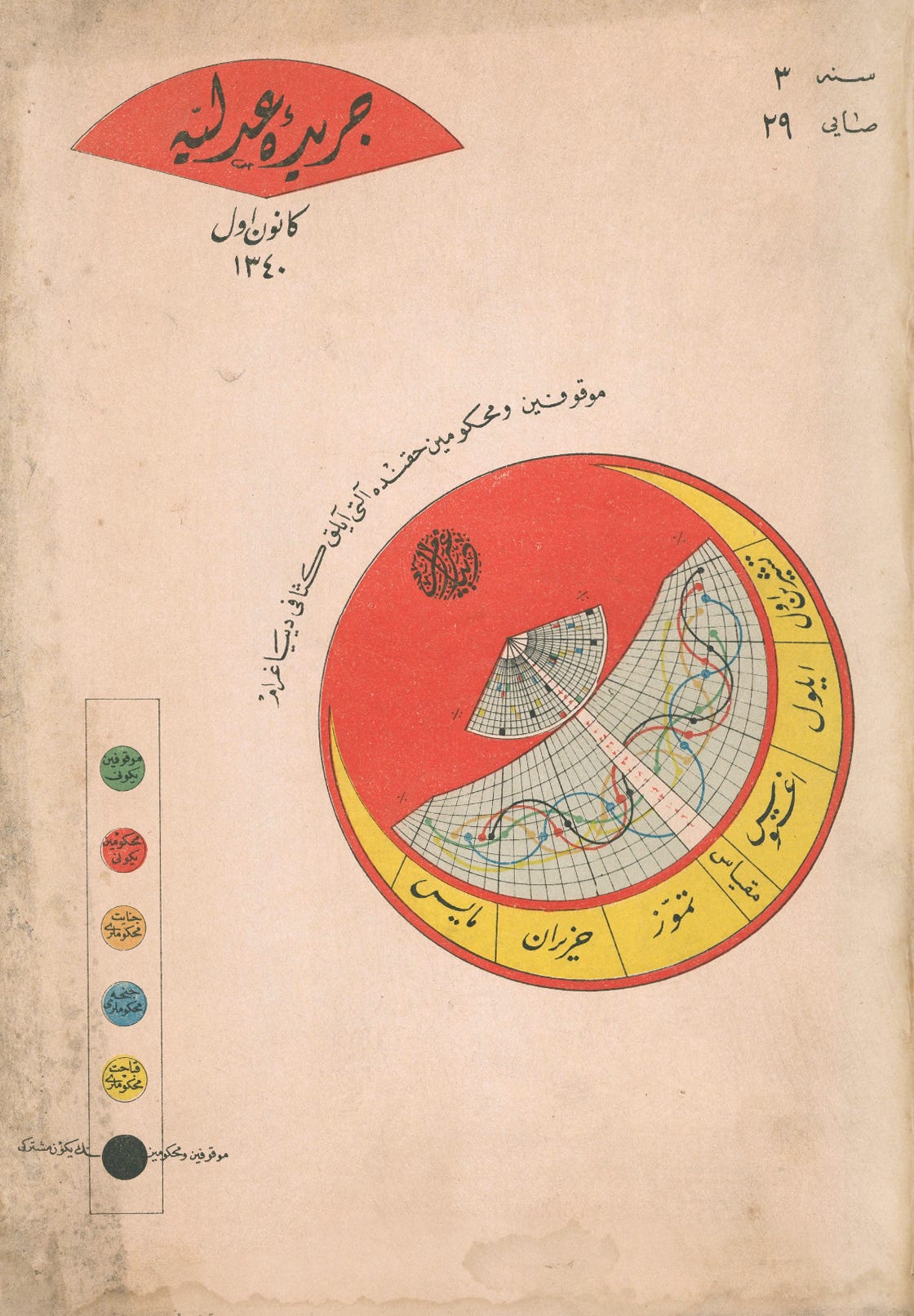
While the content of the publication is admittedly a bit dry—most of the charts cover things like the number of cases filed or decided in a certain province in a given year and the general categories those cases fell in—the visualizations themselves are energetic and bold, with saturated colors and lots of topsy-turvy type. Their focus on balance and encircling forms calls to mind classic Islamic arabesques as well as newer modes of early 20th-century graphic abstraction, like sociologist W. E. B. Du Bois’ hand-drawn infographics of African-American life that were created for the Paris World Fair of 1900 .
Sometimes, the diagrams resemble sundials or celestial charts (one of the earliest forms of data visualization?) which lend their bureaucratic content an incongruously mystical authority. Other times, the data feels almost architectural: a curving plane reminds me of an abacus and blades of grass sprout from a vessel of numbers.
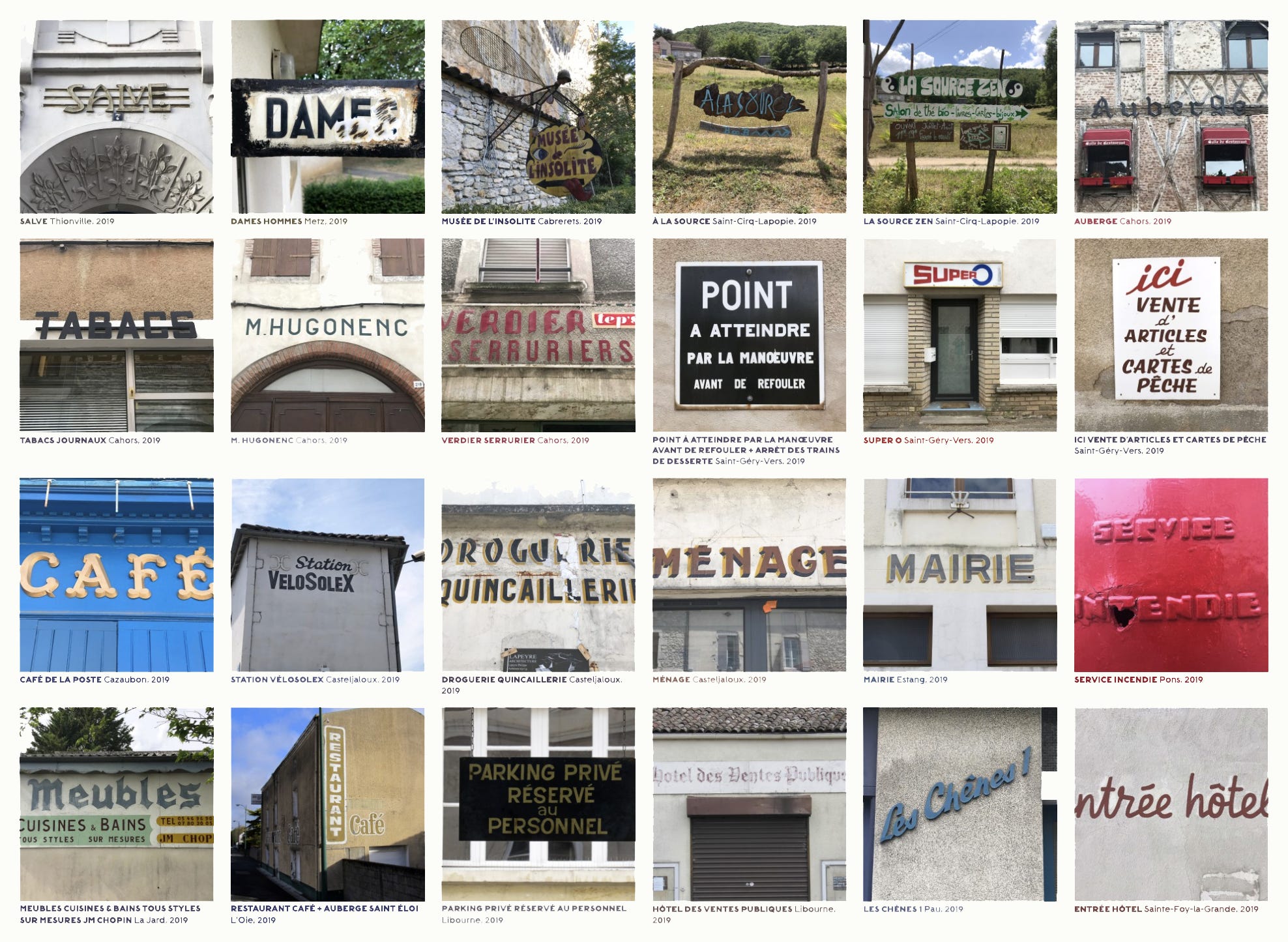
This issue’s featured archive is JulesVernacular, a photographic collection of handpainted French signs collected by Jack Usine. The archive has been going since the early 2000s and includes over 1700 examples of rural and urban signage categorized by typographic style, medium, region, and period aesthetic.
These are mesmerizing. Amazing find!
Stunning. I saw them quoted in @kasurian and had to look for myself.